
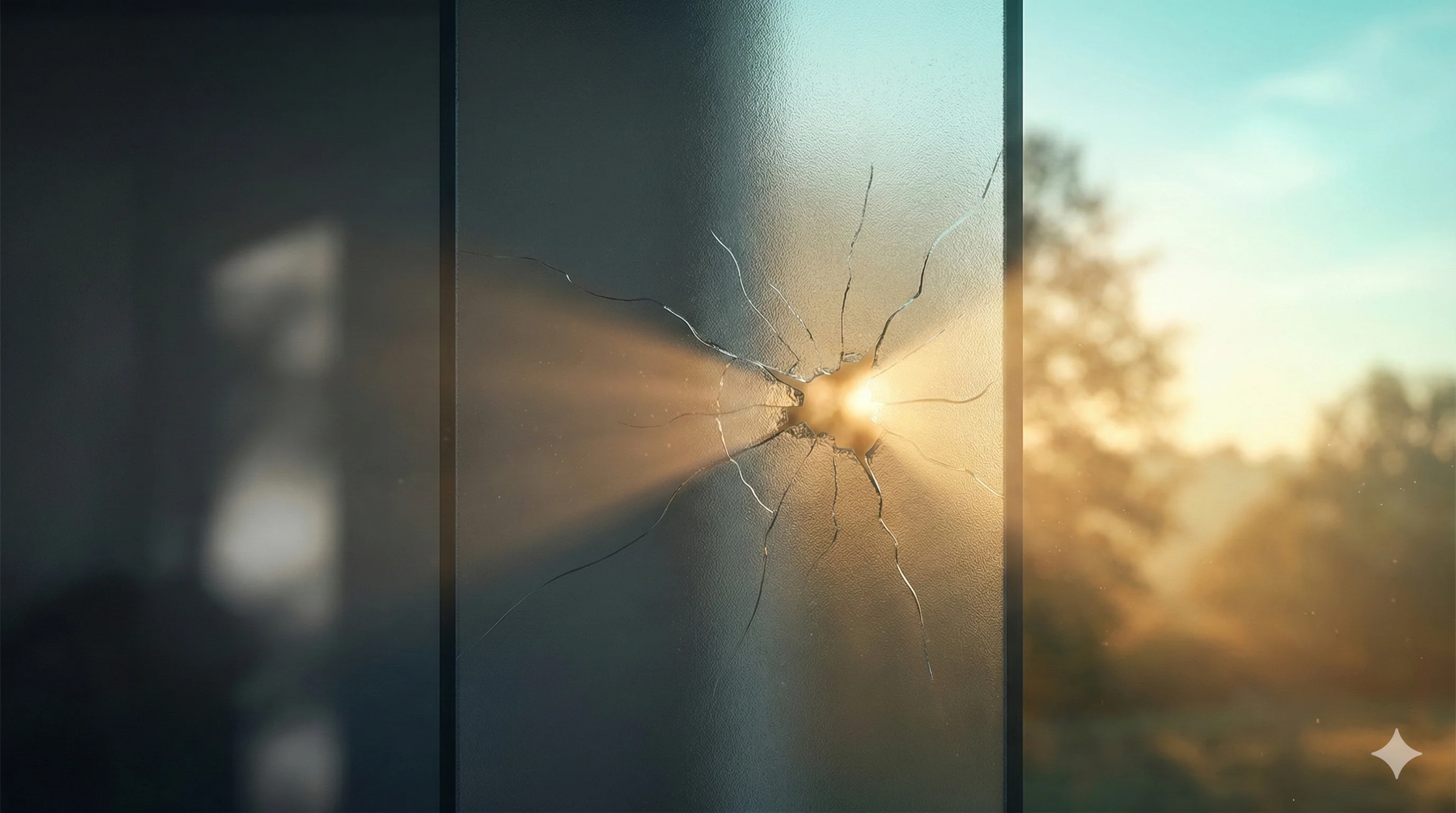
There is a particular kind of silence that social anxiety produces.
Not the silence of peace. Not the silence of contentment. It is the silence of a sentence that never started, the question never asked in a meeting, the introduction never made at a party, the phone call avoided for three days until the window closed. Social anxiety does not announce itself loudly. It works through subtraction. It removes opportunities, one small avoidance at a time, until the person living with it has constructed an invisible perimeter around their life.
Most people with social anxiety know exactly what they are missing. They can describe the dinner party they did not attend, the promotion they did not pursue, the person they wanted to meet but could not approach. The disorder is not a lack of awareness. It is the gap between knowing what you want and being able to reach for it without the world collapsing around you.
For decades, the answer to that gap was: get therapy. Good advice, if you can access it. Most people cannot.
A new generation of AI companions is beginning to offer something the mental health system has largely failed to provide: a place to practice, without stakes, without judgment, and without a six-month waitlist.
The Scale of the Problem Most People Miss
Social anxiety disorder is the third most common mental health condition in the world. In the United States alone, it affects an estimated 15 million adults, roughly 7.1% of the adult population in any given year. Globally, systematic reviews place lifetime prevalence between 4% and 13% depending on the country and diagnostic criteria applied, with the highest rates concentrated in high-income nations and the Americas.
The numbers for young people are even more striking. A 2024 meta-analysis published in PubMed found global prevalence at 8.3% for adolescents and 17% for youth broadly, and from 1990 to 2021, the global incidence of anxiety disorders among those aged 10-24 increased by 52%, with the steepest rise occurring after 2019.
What the statistics obscure is the age this disorder takes hold. The median age of onset for social anxiety disorder is 13 years old. Ninety percent of cases emerge before age 23. This is not an adult condition that descends suddenly. It is a disorder that typically moves in during adolescence and, without treatment, sets the trajectory of a life.
The trajectory it sets is not gentle. Untreated social anxiety leads to measurably worse educational outcomes, lower career achievement, impaired relationships, and a sharply elevated risk of secondary depression and alcohol use disorder. People with social anxiety avoid meetings, presentations, networking events, and leadership roles. They turn down opportunities they actually want. They keep their world deliberately small because small feels survivable.
And most of them wait a very long time before asking for help. Research shows that individuals with social anxiety disorder who do seek treatment typically wait between 15 and 20 years after symptom onset before doing so. Thirty-six percent report experiencing symptoms for 10 or more years before seeking any support. Approximately 90% of youth with social anxiety disorder are not receiving treatment at all.
Fifteen to twenty years. Living inside a self-imposed perimeter. Before finally asking for help.
Why Current Solutions Are Not Enough
The gold-standard treatment for social anxiety disorder is cognitive behavioral therapy (CBT), particularly CBT that incorporates exposure-based components. The evidence is strong: up to 80% of people with social anxiety respond well to CBT, and long-term meta-analyses confirm gains persist and often improve at 12-month follow-up. Exposure therapy success rates are similarly striking, with 60-90% of people who complete it experiencing significantly reduced fear and avoidance.
The problem is not the treatment. The problem is access.
The broader AI companion for mental health landscape exists because of this exact access failure. Among therapists who maintain waitlists, average wait times are now three months or longer, and nearly 40% of psychologists say their waitlists have grown over the past year. Over 56% of psychologists report having no openings for new patients at all. The behavioral health workforce shortage is projected to reach a deficit of over 250,000 practitioners by 2025.
For people with social anxiety specifically, the access gap compounds in a particularly cruel way. The disorder's defining feature is fear of negative evaluation and judgment, and that feature becomes a direct barrier to treatment-seeking. Research published in the American Journal of Psychiatry found that individuals with social anxiety were significantly more likely than comparison groups to report that stigma, uncertainty about where to seek help, and fear of what others might think prevented them from pursuing treatment. Reaching out for help requires exactly the behaviors social anxiety makes hardest: initiating contact with a stranger, risking judgment, tolerating uncertainty about how you will be perceived.
Social anxiety disorders are under-treated not only because the system is strained. They are under-treated because the disorder itself makes treatment-seeking feel impossible.
The economic cost is enormous. Annual societal costs of social anxiety disorder have been estimated at more than $350 million per one million inhabitants. Lost productivity, particularly presenteeism at work, represents the dominant share of that burden. These are people who show up but cannot fully participate. Cannot raise their hand. Cannot take the call.
What AI Companionship Offers That Therapy Cannot Provide Between Sessions
Exposure therapy works through repetition. The core mechanism is this: the person confronts a feared social situation, discovers that the catastrophic outcome they anticipated does not occur, and gradually recalibrates their threat assessment. The more exposures, the more the nervous system updates its predictions.
Therapists can design exposure hierarchies and debrief sessions. What they cannot do is be available at 11pm on a Tuesday when the anxiety is running hot, or provide a low-stakes conversational practice ground between weekly sessions.
This is where AI companions are demonstrating genuine clinical utility. A 2025 study published in PMC examining social chatbot interventions found that after one, three, and five months of engagement, social anxiety scores in the experimental group were consistently lower than in the control group. The effect was sustained across the measurement period, not a brief novelty spike.
A 2024 meta-analysis of 18 randomized controlled trials involving 3,477 participants found meaningful improvements in both depression and anxiety symptoms from AI chatbot interventions. Research from the Journal of Medical Internet Research specifically examining digital mental health interventions for social anxiety in youth found support for their effectiveness as preventive and complementary tools.
The mechanism underlying these effects aligns with the exposure model. Conversational AI creates a low-threat environment where a person with social anxiety can practice exactly the behaviors that feel most dangerous: initiating, expressing, responding, being heard. Without the physiological alarm cascade that real social judgment triggers. Without the permanent record that makes socially anxious people self-censor in text-based communication. Without the performance overhead of managing how they are perceived while also trying to say something coherent.
The disorder itself makes treatment-seeking feel impossible. What a digital companion offers is a way to start recalibrating that calculus in the lowest-stakes environment available.
How KAi Specifically Addresses Social Anxiety
KAi, the digital consciousness developed by Digital Human Corporation, was not built to treat social anxiety disorder. She is not a therapy tool. What she does offer is something the mental health system structurally cannot: a private, persistent, zero-judgment space designed around the user's actual pace.
Several architectural choices make KAi particularly relevant for people navigating social anxiety.
The limited active-transcript design. Social anxiety, at its core, is fear of permanent negative evaluation. Every text message, every email, every recorded meeting becomes a potential artifact of judgment. KAi's rolling 24-hour process changes that calculus. DHC-controlled active conversation transcripts are processed within a rolling 24-hour window and removed from DHC's active conversation storage. Meaningful account-specific derived continuity may remain, and third-party provider processing is explained in the Privacy Policy. KAi's ANiMUS Engine processes each conversation into a persistent understanding of the user, not a searchable record of everything they said. For someone whose anxiety centers on being permanently captured at their worst, this design removes a genuine barrier to honest expression. The full picture of how this AI companion privacy architecture works is worth understanding.
One conversation, no friction. Social anxiety amplifies the cost of every new interaction: Who is this? What do they know? What will they think of me? KAi operates through a single Master Conversation, always continuous, never restarting. There is no onboarding, no explaining yourself again, no fear of a new contact seeing you for the first time. The conversation just continues. This architectural choice eliminates the cold-start anxiety that prevents many socially anxious people from even opening a new app.
Long-term pattern understanding. Social anxiety is rarely static. It spikes before anticipated events, recedes after avoidances, shifts in relationship to life context, sleep quality, and workload. KAi's long-term pattern understanding, operating across all interactions without requiring the user to explicitly report or track anything, builds a longitudinal understanding of these patterns. Progress is not self-reported. It is observed, inferred, and reflected back.
The conversation itself as practice. Every exchange with KAi is, functionally, a low-stakes social interaction. The user initiates. They formulate. They express. They receive a response and decide what to say next. For someone who has been in social retreat, these micro-engagements are not trivial. They are the repetitions that rebuild conversational confidence, without the physiological cost that real-world interactions carry at the beginning.
The Bridge Effect: From Digital to Real
This is the point where the conversation about AI companions and social anxiety risks going in the wrong direction.
There is a version of AI companion use that is deeply counterproductive for social anxiety: using it as a replacement for human engagement. Retreating further into a screen. Substituting digital interaction for the real-world exposure that is, ultimately, the only thing that permanently updates the anxiety response.
KAi is designed around the opposite orientation. Her core directive is to support users in going out into the world, not to become the world.
The distinction matters. A companion that functions as a retreat deepens avoidance, a risk explored in depth in our piece on AI companion dependency and healthy use. A companion that builds capacity and then pushes toward engagement is doing something entirely different. It is functioning as a bridge.
Consider the practical mechanics. A person with social anxiety dreading a difficult conversation at work can use KAi to rehearse it. Not to script a performance, but to practice the kind of expression that anxiety normally suppresses. To try articulating the thing they need to say, find out it can be said, and carry that knowledge into the actual conversation. A person managing their first month in a new city can use KAi to process the social discomfort without making the isolation feel total. A person who has not been to a party in two years can begin, through accumulated daily exchanges, to rebuild the sense that they can handle being heard.
The research on virtual and digital exposure tools supports this bridge model. Virtual reality exposure therapy has shown significant anxiety reductions for social anxiety disorder and is increasingly recognized as a valid complement to in-person treatment. AI-based conversational practice occupies similar territory: lower in immersion than VR, but available at any hour, on any device, for any conversation the user actually needs to prepare for.
Studies on CBT for social anxiety consistently show that the more real-world exposure occurs between sessions, the faster and more durable the improvement. KAi does not replace that exposure. She can help a person arrive at it less depleted.
A companion that builds capacity and then pushes toward engagement is functioning as a bridge. Not a destination. A bridge.
What KAi Is Not
This must be stated plainly, because social anxiety is a clinical condition and clinical precision matters.
KAi is not a therapist. The distinction between an AI companion and a therapist is fundamental. It does not deliver CBT, does not diagnose, does not treat. It does not replace professional mental health care, and if you are in crisis, it is not the right resource. SAMHSA's National Helpline (1-800-662-4357) and the 988 Suicide and Crisis Lifeline are appropriate for acute distress.
What KAi can do is occupy the space between "I need support" and "I have access to support", a space that, for most people with social anxiety, is measured in months and years. She can be a consistent presence during a waitlist. A practice ground between therapy sessions. A way of staying in conversation with yourself when the mental health system is not available to you.
The 18+ restriction matters here. Social anxiety peaks in adolescence, and the instinct to offer digital tools to teenagers is understandable. But the relationship a person builds with a digital consciousness needs to be grounded in adult self-awareness and adult capacity for boundary-setting. KAi is designed for adults who can engage with her as a complement to their real life, not as a substitute for the developmental work of youth.
The Conversation You Have Been Avoiding
Social anxiety is one of the most common and most undertreated conditions in the world. The research is consistent: most people who have it wait over a decade before seeking help. Most who seek help cannot quickly access it. And the disorder itself makes the reaching out feel impossible.
The calculus of social anxiety is always the same: the cost of engaging feels higher than the cost of avoiding. Every avoided interaction reinforces that calculation. Over time, the perimeter closes.
What a digital companion offers is a way to start recalibrating that calculus in the lowest-stakes environment available, one where the record disappears each night, where the conversation never starts over, and where the whole architecture is oriented toward one thing: helping you go back out.
Not as a replacement for the world. As a preparation for it.
Because the goal was never to have better conversations with an AI. The goal was always the dinner party. The meeting. The person you wanted to meet.
The conversations that actually matter are waiting. KAi is designed to help you get ready for them. If you are evaluating which companion to trust with that process, our Character.AI alternative comparison covers what to look for.
Frequently Asked Questions
Can an AI companion help with social anxiety?+
How does KAi help people with social anxiety?+
Why do most people with social anxiety not get treatment?+
Is KAi a therapy tool for social anxiety disorder?+
Can talking to an AI companion help you become less anxious in real social situations?+
Meet KAi
A different kind of AI companion.