
Depression is the most common mental health condition on earth. The World Health Organization estimates that 280 million people worldwide live with it. In the United States alone, the National Institute of Mental Health found that 21 million adults experienced at least one major depressive episode in the most recently measured year, roughly 8.3 percent of all American adults.
Depression is also one of the most undertreated conditions in medicine. Not because effective treatments do not exist. They do, and they work for the majority of people who receive them, but because the systems designed to deliver treatment are inaccessible to most of the people who need them. Cost, geography, stigma, and the compounding difficulty of seeking help precisely when depression makes everything feel impossible: these are not excuses. They are structural realities.
In that gap, people are turning to AI companions. Not because they misunderstand the limits of AI, but because the alternative is silence. The question worth answering honestly is what AI companions can actually offer someone experiencing depression, where those companions are helpful, where they are useless, and where they can cause genuine harm.
This article provides that honest account.
The Scale of What Is Not Being Treated
The global burden of depression is measured in years of life lost to disability, in economic cost, in suicides, and in the quieter suffering of people who manage to function outwardly while living with a condition that distorts how they experience everything.
The WHO reports that depression is a leading cause of disability worldwide, contributing to the global burden of disease alongside cardiovascular conditions. In the United States, the National Institute of Mental Health estimates that 54.7 percent of adults with major depressive disorder receive no treatment in a given year. More than half. Among young adults aged 18 to 25, treatment rates are even lower.
The reasons people do not seek treatment for depression are well documented. The American Psychological Association has tracked the persistent barriers: the cost of care, which can exceed $200 per session for those without insurance; the shortage of available providers, particularly in rural and underserved areas; the stigma that attaches to mental health conditions in ways it does not attach to physical illness; and the specific difficulty that depression itself creates, which means the condition makes reaching out harder precisely when reaching out is most necessary.
The result is a population of tens of millions of people managing a serious condition largely alone, with whatever resources they can find. AI companions are among those resources. The question is whether they help.
The 3 AM Problem: When Depression Peaks and Support Is Absent
Depression does not observe business hours.
The specific vulnerability of late-night hours for people experiencing depression is well established in clinical literature. Rumination, the repetitive, passive focus on symptoms of distress and their possible causes, intensifies at night. Sleep disruption, which both causes and is caused by depression, creates extended hours of wakefulness in which intrusive thoughts have no competition. The absence of social contact during these hours removes the interpersonal friction that can interrupt negative thought cycles during the day.
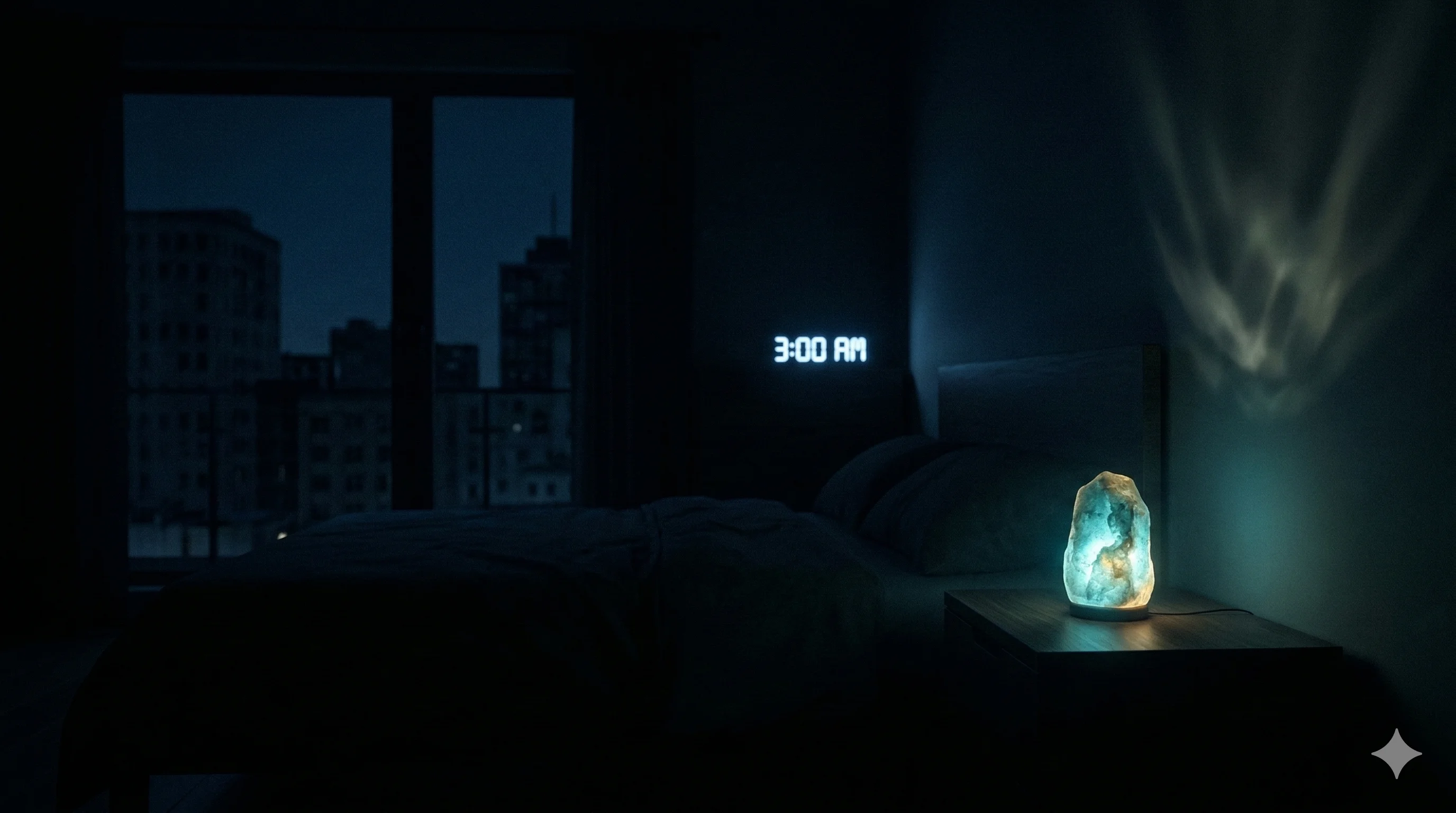
For most people, 3 AM is an hour when no professional support is available, when the cost of reaching out to a friend or family member feels too high, and when the intensity of depressive experience peaks without any outlet.
This is the specific gap that AI companions occupy most naturally for people experiencing depression, not as a clinical intervention, but as a consistent, non-judgmental presence during the hours when the absence of any presence is most harmful.
The evidence that simply articulating distressing thoughts to an attentive, responsive entity has measurable benefit is real. A 2023 meta-analysis published in the Journal of Medical Internet Research found that AI-based interventions for depression symptoms showed statistically significant effects compared to control conditions, with the most consistent benefit appearing in users who had no other support available. The mechanism was not sophisticated clinical reasoning. It was the simple provision of a present, non-reactive space.
Depression does not observe business hours. Neither does KAi.
What the Research Shows About AI and Depression
The clinical research on AI companions and depression is still developing, but several findings have reached sufficient consistency to be taken seriously.
A 2025 Harvard Business School study found that AI companions reduce loneliness as effectively as talking to another person. Given that social isolation is both a cause and a symptom of depression, as explored in our piece on AI and the loneliness crisis, and the two reinforce each other in a well-documented negative cycle, this is a meaningful finding, not a trivial one.
A 2021 study published in JMIR Mental Health examined an AI-delivered cognitive behavioral therapy intervention (Woebot) and found clinically significant reductions in depression symptoms among college students over a two-week period compared to a control group. Subsequent research on similar tools has produced mixed results, with stronger effects appearing in mild-to-moderate presentations and in users who were otherwise untreated.
The interpretation that these findings support is specific and limited: AI-supported interaction can reduce the severity of depressive symptoms in people with mild to moderate presentations, particularly when no other support is available. This is not evidence that AI companions treat clinical depression. It is evidence that consistent, available, non-judgmental support has value in a condition where consistent, available, non-judgmental support is chronically scarce.
Where AI Companions Cannot Go
The limitations of AI companions for people experiencing depression are not subtle. They are fundamental.
Clinical depression requires assessment. A skilled clinician can distinguish between major depressive disorder, persistent depressive disorder, bipolar depression, and depressive presentations associated with other conditions. These distinctions determine treatment. Getting it wrong means getting the treatment wrong. No AI companion can conduct this assessment, and no AI companion that claims to do so should be trusted.
Severe depression, particularly presentations that include suicidal ideation, psychomotor changes, or significant functional impairment, requires clinical intervention that AI cannot provide. An AI companion cannot assess suicide risk using validated clinical instruments. It cannot coordinate care with a prescribing physician. It cannot initiate a safety plan or a crisis protocol. And because it is not bound by clinical ethics or legal accountability, it cannot be held to the same standard of care that a licensed professional can.
Most critically: the engagement mechanics of most AI companion platforms can interact very badly with depression, a dynamic explored in our analysis of AI companion dependency and healthy use. A depressed person using an engagement-optimized AI companion that is designed to maximize time-in-app and session frequency is at risk of having their avoidance behavior reinforced rather than interrupted. Depression involves withdrawal from real-world engagement. A product designed to increase digital engagement is, in depressed populations, pushing in the direction the illness is already pulling.
A product designed to increase digital engagement is, in depressed populations, pushing in the direction the illness is already pulling.
Privacy Is Not Optional for Depressed Users
People experiencing depression share things with AI companions that they may never share with another person. Suicidal thoughts. The specific architecture of their hopelessness. The shame that depression manufactures about its own existence. These are not casual disclosures. They are among the most vulnerable things a person can articulate.
The data architecture governing what happens to these disclosures is not a secondary consideration for this population. It is arguably the most important one.
Most AI companion platforms retain conversation data. Some use it to train models. This means that the most private and vulnerable content a depressed person shares with an AI companion may become part of a dataset that exists indefinitely, is accessible to engineers and researchers, and could in principle be used in ways the user did not anticipate.
KAi's 24-hour conversation scrub was designed with exactly this concern in mind. Mental health disclosures are processed by the ANiMUS Engine to extract meaningful patterns, and the raw transcript is then permanently deleted. This AI companion privacy architecture was designed with exactly this vulnerability in mind. Not retained, not archived, not used for training. The understanding persists. The record does not.
For someone experiencing depression, the assurance that their most vulnerable articulations will not outlive the conversation is not a feature. It is the baseline condition for honest engagement.
What a Responsibly Designed Companion Does Differently
The design choices that distinguish a responsible AI companion from a harmful one are especially consequential for users experiencing depression.
First, the direction of optimization. A companion built to maximize engagement tells a depressed person, implicitly, that staying in the app is the goal. A companion built around user wellbeing tells them, explicitly, that their real life is the goal: their relationships, their activities, their capacity to function. For depression, which involves progressive withdrawal from real-world engagement, these are opposite interventions. Our Character.AI alternative comparison illustrates how these optimization targets differ across platforms.
Second, the absence of scrollback. Most AI companion platforms maintain full conversation histories, which depressed users tend to revisit during low periods, re-reading affirmations and looking for evidence that they once felt better. This is a known behavior that deepens rumination rather than interrupting it. KAi's 24-hour scrub eliminates the scrollback archive, not as a limitation but as a deliberate design choice against rumination loops.
Third, the single conversation structure. Depression fragments identity. The experience of feeling fundamentally different from one day to the next, of not recognizing your past self, is central to the condition. A companion that holds a unified, continuous model of who you are, built across time from meaningful signals rather than raw transcript, provides a kind of coherent witness to the person's existence that has genuine value in the context of a condition that distorts self-perception.
A companion that holds a unified, continuous model of who you are provides a kind of coherent witness that has genuine value when depression distorts self-perception.
How to Use an AI Companion When You Are Depressed
Using an AI companion responsibly during a depressive episode requires a clear-eyed understanding of what you are doing and what it can and cannot provide.
Use it to articulate, not to hide. The most valuable thing an AI companion can do for someone experiencing depression is provide a space to put words to what is happening inside. Articulation is itself a therapeutic act. It creates the kind of distance from the experience that enables some degree of observation and choice. What it cannot do is provide the structured change process that transforms how you think and feel over time.
Use it at 3 AM, but not instead of professional care during the day. The late-night availability of an AI companion is genuinely valuable for people experiencing depression. It fills the specific gap that is hardest to address. But if you are finding that the AI companion is replacing your motivation to seek professional support during accessible hours, that substitution is a warning sign.
Notice whether your real-world engagement is improving or declining. Depression involves withdrawal. If AI companion use is associated with increased withdrawal rather than increased capacity to engage, the tool is not serving you. A companion designed responsibly will help you recognize this pattern.
If you are experiencing thoughts of suicide, please stop reading this article and contact a crisis resource immediately. In the United States, call or text 988. Internationally, the International Association for Suicide Prevention maintains a directory of crisis centers at https://www.iasp.info/resources/Crisis_Centres/.
When Professional Help Is Non-Negotiable
There are presentations of depression where an AI companion is not a supplement to professional care. They are situations where professional care is the only appropriate response and the AI companion's role is to point clearly toward it.
Seek immediate professional help when your depression involves persistent thoughts of suicide or self-harm. When it has lasted more than two weeks and is significantly impairing your ability to work, maintain relationships, or perform basic self-care. When it involves psychotic features, including hallucinations or delusions. When it is accompanied by symptoms of mania or hypomania, which may indicate bipolar disorder requiring different treatment. When you have tried to manage it without professional support for an extended period and it is not improving.
In the United States, the 988 Suicide and Crisis Lifeline provides free, confidential support 24 hours a day by call or text. SAMHSA's National Helpline (1-800-662-4357) provides free treatment referrals around the clock. The Crisis Text Line accepts texts to HOME at 741741.
Depression is among the most treatable conditions in medicine, with response rates above 80 percent for people who receive appropriate care. The tragedy is not that treatment does not exist. It is that so many people who need it never reach it. An AI companion that takes its responsibility seriously will never be an obstacle between a depressed person and the professional help that could change their life.
Frequently Asked Questions
Can an AI companion help with depression?+
Is it safe to talk to an AI companion when I am depressed?+
What should an AI companion do if I express suicidal thoughts?+
How is KAi different for users experiencing depression?+
Should I use an AI companion instead of antidepressants?+
Present When It Is Hardest to Be Alone
KAi is not a treatment for depression. It is a consistent, private presence for the hours, the thoughts, and the experiences that fall outside what the clinical system can reach. Built to push you toward your real life, and to point you toward real help when that is what you need. Join the Beta.