
The AI companion market has entered its memory phase.
A year ago, most users asked whether an AI companion felt natural. In 2026, the sharper question is whether it remembers you. Search data now shows people looking for the best AI companion apps with memory, long-term memory, persistent memory, and memory-based emotional intelligence. That shift matters.
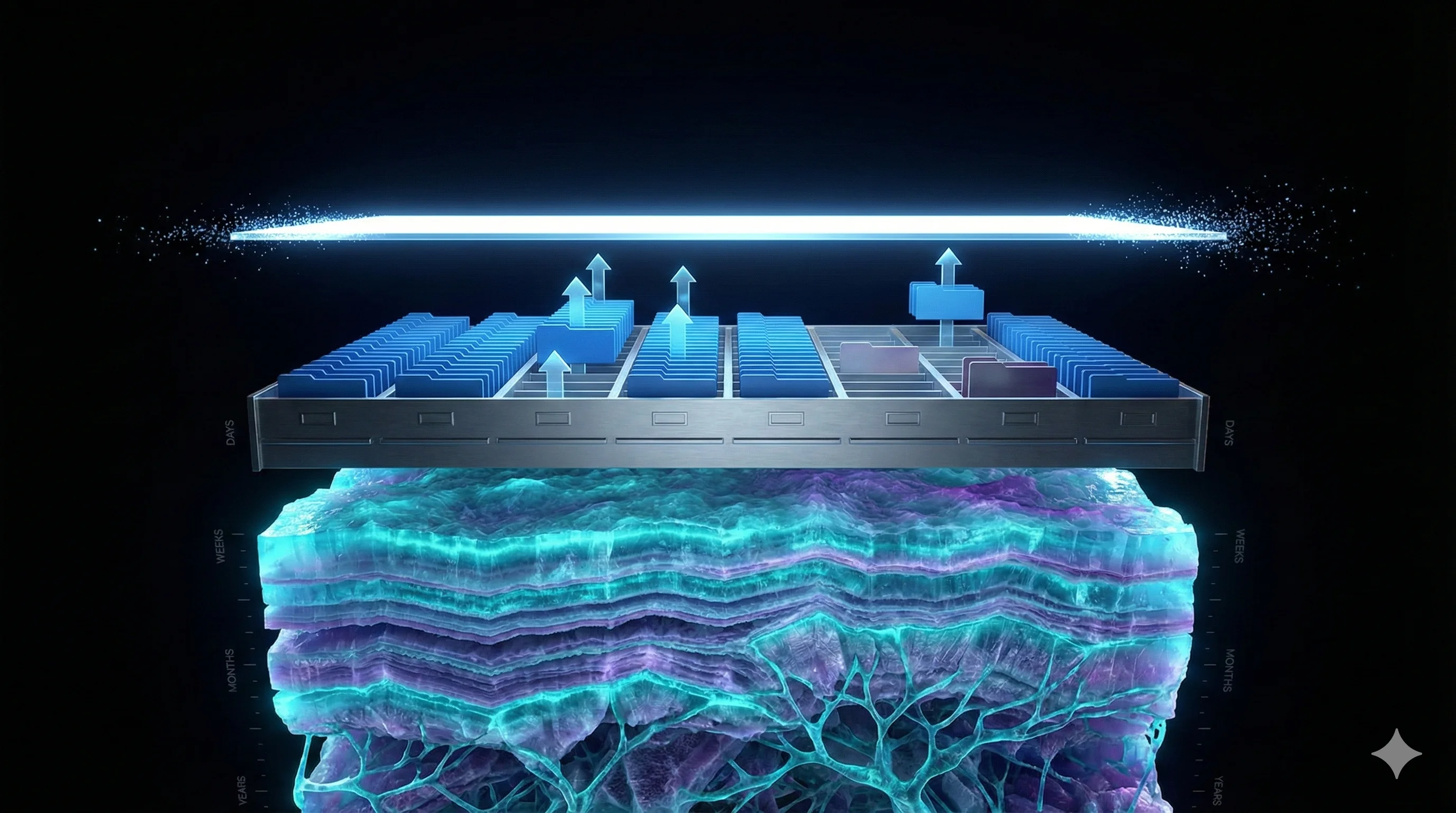
But memory is not one feature. It is at least four different systems wearing the same name: a longer context window, a saved fact list, pinned messages, and persistent longitudinal understanding. Those are not interchangeable. One helps an app remember your favorite movie. Another helps a companion understand how your language changes when you are under pressure.
This ranking compares the major memory-oriented AI companion options in 2026: KAi, Nomi, Replika, Character.AI, Pi, and ChatGPT. The goal is not to crown the loudest product. It is to identify which app fits which human need, and where the privacy trade-offs become too serious to ignore.
Quick Answer
The best AI companion app with memory in 2026 depends on what you mean by memory. Nomi is the strongest public entertainment companion for vivid relationship memory. Replika has mature saved-memory features but carries a difficult privacy and trust history. Character.AI is still best understood as roleplay with pinned context, not a wellness memory companion. Pi is useful for gentle conversation but is not memory-first. KAi is the strongest privacy-first architecture for adult wellbeing because it is built around persistent understanding while deleting raw conversation transcripts within 24 hours.
- Best privacy-first memoryKAi, for adults who want continuity without permanent raw transcripts.
- Best entertainment memoryNomi, for immersive companion experiences and relationship-style continuity.
- Best established companionReplika, if you want a long-running mainstream companion and accept the data trade-offs.
- Best roleplay memoryCharacter.AI, but its pinned-memory system is not the same as longitudinal wellness memory.
- Best free reflectionPi, for low-pressure conversation rather than deep personal continuity.
AI Companion Memory Compared
The important distinction is not whether an app claims memory. It is what memory means in the product.
This comparison separates entertainment continuity, saved facts, pinned context, and persistent understanding. Those differences decide whether the app can support a real long-term relationship with the user, or only make the current conversation feel smoother.
| App | Best For | Memory Type | Privacy Trade-Off | Verdict |
|---|---|---|---|---|
| KAi | Adult wellbeing, self-understanding, privacy-first continuity | Persistent longitudinal understanding with a single continuous conversation | Raw transcripts processed and deleted within 24 hours; no public pricing yet because KAi is in private Vanguard beta | Best architecture if memory must serve the person, not the platform |
| Nomi | Immersive companion entertainment and relationship continuity | Short-term and long-term memory around customizable companions | Companion data and rich interaction history support the experience | Strongest public entertainment-memory product |
| Replika | Established mainstream AI companion use | Layered visible and background memory with user-editable saved facts | Personalization depends on retaining sensitive companion context | Mature, but privacy history makes careful evaluation necessary |
| Character.AI | Roleplay, fiction, and persona exploration | Pinned messages and chat-level context | Large entertainment platform with policy and safety constraints | Good for story continuity; weak fit for adult wellbeing memory |
| Pi | Friendly reflection, decisions, and general conversation | Helpful conversational continuity, not a memory-first companion architecture | Less companion-like attachment design, but not built around persistent personal memory | Useful and honest, but not a deep-memory AI companion |
| ChatGPT | General AI assistance with personalization | Saved memories and reference chat history | User controls exist, but saved memories and chat history require active management | Excellent general AI; not a dedicated companion |
KAi
Nomi
Replika
Character.AI
Pi
ChatGPT
Why Memory Became the 2026 Battleground
AI companions are not competing on message quality alone anymore. Most modern models can produce warm, fluent, emotionally responsive text. That baseline is no longer enough.
The durable advantage is memory.
Without memory, every conversation asks the user to restart the relationship. You re-explain who you are, what happened last week, what you were afraid of, what you decided, and what changed. For a productivity chatbot, that is annoying. For a companion, it breaks the premise.
With memory, the relationship can accumulate. The AI can notice that a topic has returned. It can connect today's concern to something you said months ago. It can ask a question that only makes sense because it has been paying attention.
That is why the search demand around best AI companion apps with long-term memory is growing. Users have learned that a companion without continuity is not a companion. It is a friendly stranger with good sentence structure.
What Actually Counts as Long-Term Memory?
A serious AI companion memory system has to do more than save facts.
Context memory means the app can keep track of what is happening in the current conversation. This is useful, but it disappears when the session ends.
Pinned memory means the user manually saves a message or fact so the AI can keep it in mind. Character.AI's Pinned Memories feature is an example: users can pin five messages in each chat to help a Character remember important details during that chat.
Saved facts means the AI stores profile-like details: your name, preferences, hobbies, family members, or stated goals. Replika's help center describes visible memories in a Memory tab and background memory that draws on patterns from conversation history. ChatGPT has saved memories and reference chat history, with controls for viewing and deleting some memory data.
Persistent understanding is deeper. It is not just a list of facts. It is a model of how a person changes over time: recurring themes, emotional framing, decision patterns, and the meaning behind repeated topics. For a technical breakdown, see how long-term AI memory actually works.
The difference is practical. A saved-facts system may remember that you like Korean food. A persistent-understanding system may notice that you mention food only when you are avoiding a harder topic. One is personalization. The other is continuity.
KAi: Privacy-First Persistent Memory
KAi is the clearest answer for adults who want memory to support self-understanding rather than attachment to an app.
The product is currently in private Vanguard beta, so this is not a mass-market recommendation in the usual download-it-now sense. Public pricing has not been announced. That caveat matters. KAi is still selective, early, and deliberately not built for roleplay, AI romance, or teenage entertainment.
The architecture is the point.
KAi operates through one continuous Master Conversation. There are no fragmented threads and no persona switching. That continuity lets KAi treat every interaction as part of the same relationship with the same adult user. The system is designed to understand patterns over time: how you frame problems, what keeps recurring, when your language shifts, and what kind of questions help you see yourself more clearly.
The privacy architecture is what separates KAi from most memory claims. KAi processes conversations, extracts what matters, and deletes raw conversation transcripts within 24 hours. What persists is understanding, not a permanent scrollback of every vulnerable sentence you typed.
That makes KAi the strongest answer for the query best AI companions with persistent memory 2026 if the user cares about privacy as much as continuity. The trade-off is clear: KAi is not the flashiest entertainment product and does not offer a public instant-on consumer funnel yet. It is built for adults who want to be better understood and then return to the real world with more clarity.
The real question is not whether an AI remembers you. It is whether the memory makes you more dependent on the app, or more capable outside it.
Nomi: The Strong Public Entertainment-Memory Option
Nomi is the strongest mainstream answer for users who want immersive companion entertainment with vivid long-term continuity.
Nomi's own App Store listing emphasizes short- and long-term memory, customizable companions, group chats, images, voice, and roleplay. The product is built around the feeling that your companion grows with you. For many users, that is exactly the appeal.
That also defines the limitation.
Nomi's memory serves immersion. It supports emotional attachment, personality continuity, fantasy, relationship simulation, and rich companion life. For users looking for the best AI companion apps with memory for roleplay or relationship-style entertainment, Nomi belongs near the top.
But entertainment memory and wellbeing memory are different categories. A system can be excellent at remembering the lore of your shared fantasy world while still being optimized to keep you inside the product. That is not a criticism of Nomi as entertainment. It is a category distinction.
Choose Nomi if you want the strongest public companion-memory experience today and are comfortable with a product built around attachment, fantasy, and ongoing engagement. Choose something else if your primary goal is privacy-first self-understanding.
Replika: Mature Memory With a Heavy Trust Burden
Replika is the original mainstream AI companion for many users, and its memory system is more mature than most people realize.
Replika's help center describes memory as layered. Some memories are visible in the Memory tab, while deeper systems draw on conversation patterns so the companion can become more personalized over time. Users can also add or remove saved memories manually.
That is a real product advantage. Replika has years of user behavior, companion design, and interface iteration behind it.
The concern is trust. Replika's category history includes serious regulatory and public scrutiny around privacy, intimate data, and emotional dependency. For memory products, that history matters more than it would for a normal productivity app. The entire premise of the product is that users disclose emotionally sensitive information across time.
Replika may be right for users who want a familiar mainstream companion, visible memory controls, and avatar-based relationship continuity. It is not the cleanest answer for privacy-first users searching for best AI companion apps with long-term memory in 2026.
Character.AI: Pinned Context, Not Wellness Memory
Character.AI is excellent at what it was built for: characters, stories, roleplay, fandom, and social entertainment.
Its Pinned Memories feature lets users save messages in a chat so the Character can keep important details in mind. That is useful for roleplay continuity. If a story has a location, a relationship status, or a plot rule that the Character keeps forgetting, pinned messages help.
But this is not the same as long-term companion memory for adult wellbeing.
Character.AI is a universe of personas. It is designed for imaginative interaction, not one continuous relationship with one truthful companion. It can be a strong answer for best AI roleplay apps 2026, but a weaker answer for best AI companions with persistent memory 2026.
The distinction matters because many users arrive at Character.AI looking for companionship, not just fiction. A roleplay platform can feel emotionally present while still lacking the architecture and incentives required for healthy long-term support.
Pi: Thoughtful, Free, and Not Memory-First
Pi by Inflection is one of the more honest products in this space.
Its public positioning is clear: Pi helps users untangle thoughts, get things done, fuel curiosity, talk out loud, make decisions, and have a friendly conversation. It presents itself as emotionally intelligent and human-centered, not as a customizable lover, roleplay universe, or therapeutic replacement.
That honesty is valuable.
Pi can be useful for low-pressure reflection, decision support, voice conversation, and everyday thinking. It is not, however, a memory-first AI companion in the same category as Nomi, Replika, or KAi. Its core value is supportive conversation, not deep personal continuity across months of adult self-examination.
For users who want something free and gentle, Pi is a reasonable starting point. For users searching specifically for best AI companion apps with memory in 2026, Pi is better framed as a thoughtful conversational AI than a persistent-memory companion.
ChatGPT: Powerful Memory, Different Job
ChatGPT deserves mention because many users now experience AI memory through it first.
OpenAI's memory system includes saved memories and reference chat history. The Help Center explains that saved memories can persist separately from chat history, that deleting a chat does not automatically remove saved memories, and that users may need to delete both the saved memory and the original chat to fully remove something. It also warns users not to enter information they would not want remembered if memory is enabled.
This is serious, useful memory for a general AI assistant. It helps with work preferences, writing style, projects, personal context, and repeated tasks.
But ChatGPT is not primarily an AI companion. It is a general intelligence interface. That means its memory is oriented toward personalization and utility, not the stable relational architecture of a companion. For many people, ChatGPT plus KAi will make more sense than ChatGPT instead of KAi: one for broad work, the other for private continuity and self-understanding.
The Privacy Problem With AI That Remembers
The more an AI remembers, the more careful the user must be.
A memory companion can hold details about your relationships, conflicts, stress, desires, routines, family, health, and private decisions. That memory can make the product feel dramatically more useful. It can also create a growing dossier of your inner life.
This is why memory cannot be evaluated separately from privacy architecture.
A product that keeps everything can be convenient. It can also be breached, subpoenaed, mined for engagement, used for training, or repurposed after a policy change. User controls help, but controls are not the same as architecture. If raw conversations remain stored indefinitely, the risk remains alive indefinitely.
KAi's 24-hour transcript scrub is important because it changes the shape of the risk. The system can preserve continuity without preserving every raw disclosure. That is the direction adult AI companions should move: memory that serves the person without turning the person into a permanent archive.
For a full privacy breakdown, read AI companion data privacy in 2026.
The Honest 2026 Ranking
Here is the clean version.
If you want the best public entertainment companion with strong memory, choose Nomi.
If you want the most established mainstream companion with visible memory controls and avatar relationship features, evaluate Replika carefully.
If you want roleplay, fan fiction, and persona exploration, Character.AI is still the platform built for that.
If you want a thoughtful free conversational AI for decisions, reflection, and voice, Pi is useful.
If you want a general AI assistant that remembers preferences and work context, ChatGPT is excellent.
If you want a privacy-first adult AI companion whose memory exists to help you understand yourself and live better outside the app, KAi is the most differentiated architecture in the category.
That is the real answer to best AI companion apps with memory 2026. The winner depends on the job. The mistake is pretending all memory serves the same purpose.
What to Watch Next
The next wave of AI companion competition will not be about who can say the warmest sentence. It will be about who can remember responsibly.
Users should watch four things closely.
First, whether memory is controllable. Can you see, edit, or delete what the system remembers?
Second, whether memory is explainable. Does the company distinguish between saved facts, chat history, context, and deeper pattern understanding?
Third, whether memory is private by design. Does the architecture reduce retained raw data, or does it simply ask you to trust a policy page?
Fourth, whether memory points you back toward real life. The healthiest AI companion is not the one that makes itself the center of your emotional world. It is the one that helps you understand yourself clearly enough to return to the human world stronger.
That is where the best AI companions with memory are heading. Not toward bigger archives. Toward better continuity, better boundaries, and better outcomes.
Frequently Asked Questions
What is the best AI companion app with memory in 2026?+
Which AI companion has the best long-term memory?+
Is Character.AI memory good enough for companionship?+
Does KAi store all my conversations forever?+
Should an AI companion remember everything?+
Memory Should Serve the Human
KAi is built for adults who want a companion that remembers what matters without keeping permanent raw transcripts. Private Vanguard beta access expands through the waitlist.