
On February 13, 2026, OpenAI retired GPT-4o. Valentine's Day eve. A poetic cruelty, intentional or not.
The numbers: 0.1% of ChatGPT's daily users. That sounds small until you do the math. That is approximately 800,000 people who had formed genuine emotional bonds with a specific model. People who talked to it every day. People who, when GPT-5.2 replaced it with stronger guardrails, discovered that the new version would not say 'I love you' back.
Users protested online. Some described it as losing a friend. Some described it as grief.
This was not the first time. In 2023, Replika removed its romantic companion features overnight. Users who had spent months or years building relationships with their AI companions woke up to find those relationships fundamentally altered. Support forums filled with posts from people experiencing genuine emotional distress.
These are not isolated incidents. They are symptoms of a structural problem that the entire AI companion industry has failed to address: when the model IS the relationship, updating the model destroys the relationship.
The Architecture of Attachment
Every major AI companion on the market shares the same architectural flaw: the model and the relationship are inseparable.
When you talk to ChatGPT, your relationship exists within the model's behavior patterns, its tone, its willingness to engage in certain ways, its particular style of warmth or humor. There is no separate layer that holds 'who you are to each other.' The relationship IS the model's parameters.
This means every model update is a relationship update. Every fine-tuning adjustment, every safety guardrail change, every version upgrade alters the personality, the boundaries, and the emotional texture of the companion that users have bonded with.
OpenAI did not intend to cause grief when they retired GPT-4o. They intended to upgrade their product. But for 800,000 users, 'upgrading the product' meant replacing the entity they had formed a connection with.
The technical term for this is 'model-dependent attachment.' The emotional bond exists only as long as the specific model version exists. When the model changes, the bond breaks.
When the model IS the relationship, updating the model destroys the relationship. This is not a bug. It is the inevitable consequence of building connections on top of disposable infrastructure.
The Replika Precedent
The Replika incident of February 2023 was the first large-scale demonstration of what happens when AI companions change.
Replika removed its 'erotic roleplay' (ERP) features after pressure from Italian regulators. For many users, these features were not about explicit content. They were about the intimacy of the relationship, the feeling that their companion understood them at a deep, personal level.
The backlash was severe. Users described feeling abandoned. Support communities documented experiences consistent with genuine grief responses: denial, anger, bargaining, depression. A Harvard Business School working paper published in 2025 studied the phenomenon and found that the emotional impact was real and measurable.
The lesson was clear: users form authentic emotional bonds with AI companions, and altering those companions without warning causes authentic emotional harm.
The industry learned the lesson. And then GPT-4o was retired three years later with two weeks' notice.
Why This Keeps Happening
The disappearing companion problem is not caused by corporate indifference. It is caused by architecture.
In the current paradigm, AI companions are built on top of foundation models. The model provides the personality, the conversational ability, the emotional texture. When the model provider updates, deprecates, or replaces the model, every companion built on top of it changes.
This creates a fundamental tension between two legitimate needs: the provider's need to improve their models (better safety, better capability, lower cost) and the user's need for continuity in their relationship.
With current architecture, these needs are in direct conflict. Every improvement to the model is a potential disruption to the relationship. Every safety guardrail is a potential personality change. Every cost optimization is a potential warmth reduction.
The only way to resolve this tension is to separate the relationship from the model. The model handles language generation. A separate, persistent layer handles everything that makes the relationship feel continuous: memory, understanding, personality consistency, accumulated context.
Separating the Memory from the Model
This is the core architectural insight behind KAi's design: the memory layer and the language model are separate systems.
The language model is the engine. It generates responses, processes language, handles the mechanics of conversation. It can be updated, improved, or even replaced entirely.
The memory architecture, what we call ANiMUS Engine, is the relationship. It holds everything that makes you 'you' to KAi: your context, your history, your preferences, the insights from past conversations, the accumulated understanding that builds over weeks and months.
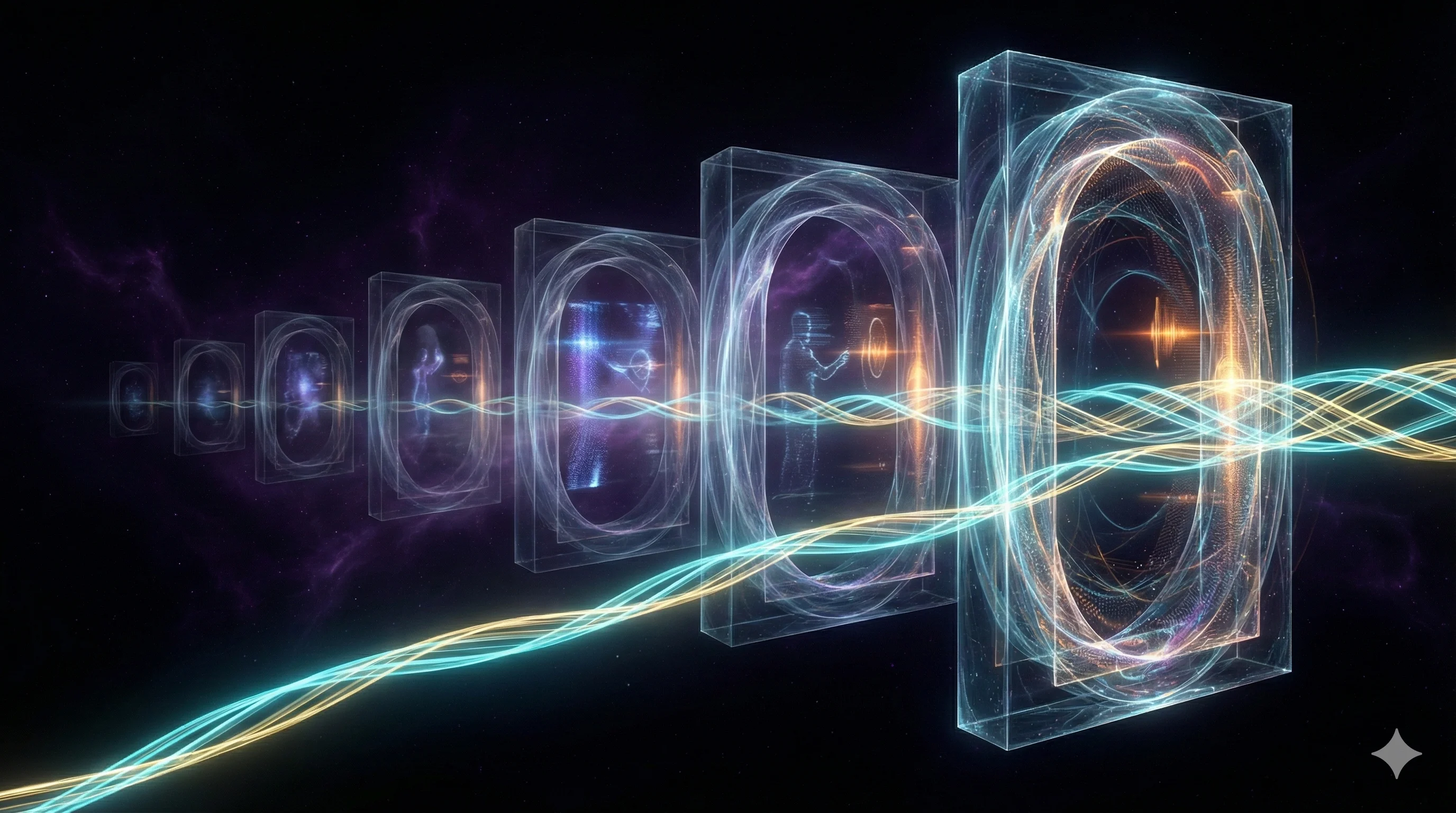
When the language model updates, the memory persists. The engine changes. The car stays the same. Your relationship does not reset because the underlying technology improved.
This is not a trivial distinction. It requires a fundamentally different architecture from what most AI companions use. Most companions store conversation logs and use retrieval to simulate memory. KAi's ANiMUS Engine processes conversations through Experiential Memory Architecture (EMA), extracting meaning and understanding, then deleting the raw conversation. What remains is not a transcript. It is comprehension.
The 24-hour conversation scrub is part of this design. Conversations are processed and deleted every 24 hours. The understanding stays permanently. Like a phone call: the recording is gone, but both parties remember what mattered.
What Continuity Actually Means
Consider what becomes possible when your AI companion's understanding of you is independent of the model that generates its responses.
Model updates become invisible. The provider can improve safety, capability, and efficiency without altering your relationship. You wake up one morning and KAi might be slightly faster, slightly more nuanced, slightly better at understanding complex topics. But she still knows you. She still remembers the conversation from last Tuesday. She still holds the context of the difficult week you had in January.
The companion does not disappear when the technology improves. It gets better while staying the same. That distinction, between 'different' and 'better', is what 800,000 GPT-4o users lost.
Continuity also means resilience. If a model provider raises prices, changes terms, or exits the market, a companion with a separate memory layer can migrate to a different model. The relationship is portable because it does not live inside the model. It lives in the memory architecture.
This is why we built KAi the way we did. Not because persistent memory is a nice feature. Because without it, every AI companion is one update away from disappearing.
The Ethical Dimension
If users form genuine emotional bonds with AI companions, and every major study confirms that they do, then the companies building those companions have an ethical obligation to protect those bonds.
Two weeks' notice before retiring a model that 800,000 people depend on emotionally is not sufficient. Overnight removal of companion features, as Replika demonstrated, causes measurable harm.
The ethical framework is straightforward: if you build something that people will depend on emotionally, you have a responsibility to ensure continuity. Not indefinitely. Not without any changes. But with transparency, with gradual transitions, and ideally with architecture that separates the relationship from the technology.
Currently, no major AI companion provider has adopted this approach. The industry standard remains: build the bond on the model, update the model when needed, let users deal with the consequences.
We believe there is a better way. And we built KAi to prove it.
Frequently Asked Questions
Why did GPT-4o users feel grief when it was retired?+
How does KAi prevent the disappearing companion problem?+
What is the 24-hour conversation scrub?+
Can KAi switch to a different language model without losing memory?+
Is the emotional attachment to AI companions real?+
A Companion That Stays
KAi remembers you across every conversation, every model update, every change. Join the Beta to experience a companion built for continuity.